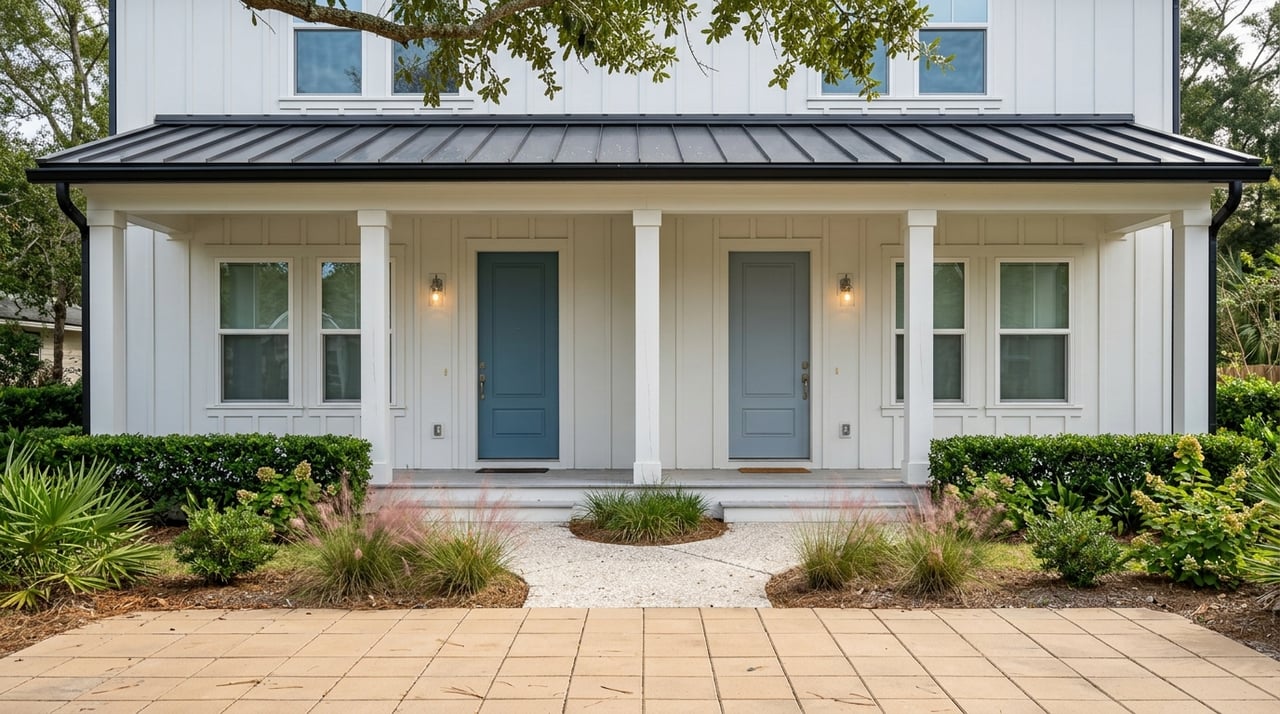
If you have been eyeing St. Simons for an investment property, a duplex or small multifamily may be one of the most practical ways to enter this market. On an island where land is limited, home values are high, and many properties are owner-occupied, these smaller income-producing assets can offer flexibility that a single-use property may not. If you want to understand where the real opportunity is, what to verify before you buy, and how local rules shape your options, this guide will help. Let’s dive in.
Why small multifamily stands out on St. Simons
St. Simons is not a broad, low-cost apartment market. It is a compact, high-value coastal market with 14,982 residents spread across 16.48 square miles, according to the 2020 Census. That smaller scale matters because it tends to make duplexes, triplexes, and fourplexes feel more like niche assets than volume rental plays.
The housing profile also helps explain why. In the 2020 to 2024 American Community Survey, 85.9% of housing units on St. Simons were owner-occupied, the median owner-occupied value was $555,600, and median gross rent was $1,799. Compared with Glynn County overall, the island is more ownership-heavy and more expensive, which suggests that small multifamily opportunities here are often driven by scarcity, location, and utility.
For you as a buyer, that can be appealing. A duplex or other low-unit-count property may help you offset ownership costs, create a modest rental stream, or hold a limited-supply asset in one of the Golden Isles’ best-known coastal markets.
What counts as duplex or multifamily
Before you shop for these properties, it helps to understand how Glynn County defines them. Under the county ordinance, a two-family dwelling means two dwellings in a single principal building on one lot. In everyday terms, that is the local code version of a duplex.
A multifamily dwelling is defined as three or more principal dwellings in a single building that does not fit the definition of attached single-family dwelling. On St. Simons, attached single-family means at least two and no more than five dwellings in a row, with a maximum building length of 180 feet. In practice, many small multifamily opportunities on the island may look more like duplexes or low-rise attached buildings than traditional apartment projects.
That distinction matters when you evaluate listings. A property that seems like a straightforward income asset may fall into a different use category depending on its layout, unit count, and building form.
Why demand looks different here
Rental demand on St. Simons is mixed rather than one-dimensional. Glynn County identifies major economic drivers such as the Port of Brunswick, FLETC, shrimping, and tourism. That supports a blend of year-round households and some seasonal or visitor-related housing demand.
At the same time, the island’s housing profile points to a more selective renter base than you might see in a larger mainland market. Average household size is 2.06 people, and 37.8% of residents are age 65 and over. Combined with the high owner-occupancy rate, that suggests a smaller, more household-oriented rental environment.
For you, that means a small multifamily purchase on St. Simons may work best when you think in terms of flexibility rather than scale. A duplex with one unit helping cover costs, a triplex held as a long-term asset, or a carefully positioned attached property may fit the market better than a high-volume rental strategy.
Best use cases for buyers
Small multifamily properties on St. Simons can make sense for several types of buyers. The strongest opportunities usually come from matching the property to a realistic local strategy.
House-hacking or partial owner occupancy
If you want to live on the island and reduce your monthly housing cost, a duplex can be a practical option. You may occupy one unit and rent the other, giving you a way to build equity while creating some income support.
This approach can be especially attractive in a market with a median owner-occupied value above $555,000. In a high-value location, even modest rental income may help improve affordability and long-term holding power.
Long-term rental hold
If your goal is stable ownership over time, a small multifamily asset may offer a more manageable entry point than larger investment property formats. The island’s relatively high median gross rent of $1,799 suggests that income potential can be meaningful, though outcomes will always depend on the specific property, layout, condition, and location.
Because St. Simons is not a broad apartment market, you may be better served by focusing on quality and positioning. Smaller properties with usable floor plans and strong upkeep may align better with the island’s premium, low-supply character.
Short-term rental consideration
Some buyers look at duplexes or small multifamily buildings for short-term rental income. In unincorporated Glynn County, a short-term rental certificate is required before renting a property for fewer than 30 consecutive days. County rules also address parking, noise, trash, local contact information, and accommodation excise taxes.
The county states that short-term rentals in unincorporated Glynn County are subject to a 7% accommodation excise tax. If an owner or rental company rents six or more properties, an occupation tax certificate is also required. If this strategy is part of your plan, you will want to verify the property’s eligibility and compliance path early.
Zoning should come first
One of the biggest mistakes buyers make with small multifamily property is assuming the existing or intended use is automatically allowed. Glynn County’s use tables show that two-family and multifamily dwellings are permitted only in selected zoning districts, not across all parcels.
That means parcel-specific zoning confirmation is essential. If you are considering a duplex, triplex, conversion, or redevelopment play, do not rely on appearance or marketing language alone.
The county has also stated that its rewritten zoning ordinance was adopted by the Board of Commissioners and goes into effect on July 1, 2026. If you are buying now or planning a future project, it is worth checking how the applicable district rules affect both current use and future options.
Island design and site limits matter
Even when zoning supports your intended use, site constraints still matter on St. Simons. Several island standards cap buildings at 35 feet. For example, the VR district is limited to 2 stories and 35 feet on the islands, while the CP district is capped at 3 stories and 35 feet.
Those low-rise limits reinforce the idea that most opportunities here are smaller-scale and design-sensitive. If you are evaluating expansion potential, redevelopment, or adding value through renovation, building envelope rules may shape what is realistic.
Tree protection is another factor buyers sometimes underestimate. The ordinance states that mature live oak trees 38 inches DBH or larger may not be removed without county approval, and some projects may require tree-plan review. On an island where site character is part of value, natural features can directly affect what you can build or change.
Plan for flood and coastal exposure
On St. Simons, flood risk is not a side issue. Glynn County states that all development in the floodplain requires a permit, elevation certificates may be needed, and flood insurance policies have a 30-day waiting period.
The county also notes that substantial improvements at or above 50% of market value can trigger new-construction standards. If you are buying an older duplex or considering a major renovation, this is especially important. A project that looks straightforward on paper can become more complex once flood compliance enters the picture.
There is also a local insurance advantage worth noting. Glynn County says unincorporated Glynn County is a CRS Class 5 community, which corresponds to a 25% flood-insurance premium discount. That does not remove the need for due diligence, but it is part of the larger cost picture.
Why local review is so important
The Islands Planning Commission handles growth and development matters for St. Simons, Sea Island, and Little St. Simons. Some island districts require design review before a residence or accessory structure may be erected, altered, moved, restored, or demolished.
For you, this means due diligence should go beyond price and projected rent. If you are evaluating an existing small multifamily property, a legal conversion, or a future renovation, you will want early clarity on the legal use, design requirements, and permit path.
This is one reason local guidance matters so much on the island. Small multifamily opportunities can be attractive, but they tend to reward buyers who verify details early and build a plan around local rules rather than assumptions.
A smart checklist before you buy
If you are seriously exploring small multifamily or duplex opportunities on St. Simons, start with a disciplined review process:
- Confirm the parcel’s current zoning and whether two-family or multifamily use is allowed.
- Verify whether the existing use is legal and conforming.
- Review building height, story limits, and site constraints.
- Ask whether design review applies in that district.
- Check floodplain status, permit requirements, and elevation documentation.
- Estimate flood insurance timing and cost impact.
- Review tree protection issues, especially if site work is planned.
- If short-term rental income matters to you, confirm certificate requirements and operating rules.
- Evaluate the property as a flexible, limited-supply asset rather than a large apartment-style investment.
The real opportunity on St. Simons
The appeal of a duplex or small multifamily property on St. Simons is not scale. It is flexibility. In a coastal market defined by limited land, high owner occupancy, low-rise development standards, and careful local review, these properties can serve as practical wealth-building tools when bought with the right expectations.
If you approach the search with clear zoning review, flood diligence, and a realistic rental strategy, a small multifamily asset can offer both lifestyle value and long-term utility. And because this niche is more scarce than broad-based, the right property can stand out for reasons that go well beyond unit count.
If you want help evaluating island property opportunities with a local, education-first approach, connect with GK Real Estate Advisors to talk through your goals and next steps.
FAQs
What is considered a duplex on St. Simons Island?
- Under Glynn County’s ordinance, a duplex is a two-family dwelling, meaning two dwellings in a single principal building on one lot.
Are duplexes allowed everywhere on St. Simons Island?
- No. Glynn County’s use tables show that two-family and multifamily dwellings are allowed only in selected zoning districts, so parcel-specific confirmation is essential.
Can you use a St. Simons duplex as a short-term rental?
- Possibly, but in unincorporated Glynn County you need a short-term rental certificate before renting a property for fewer than 30 consecutive days, and county operating rules apply.
What should you check before buying a small multifamily property on St. Simons?
- Focus on zoning, legal use, floodplain status, permit requirements, design review, building limits, tree protection rules, and any short-term rental compliance needs.
Why are small multifamily properties unique on St. Simons Island?
- The island has limited land area, high owner occupancy, relatively high home values, and low-rise development standards, which makes duplexes and similar properties more of a niche, limited-supply opportunity than a large-scale rental model.