If you live here, you already know the season by feel. The porch lights flip to red, the beach umbrellas come home at sundown, and neighbors start comparing crawl counts the way people elsewhere compare rainfall. What is new in 2026 is that the entire island's nesting map now updates on your phone in near real time, and it has quietly reorganized how a lot of full-time residents plan their evenings.
That is the thesis of this post. Turtle season on Jekyll has always shaped daily life. This year, thanks to a new public dashboard and a strong early nesting run, it is shaping it with more information and more urgency than most residents are used to.
The dashboard that changed the routine
The Georgia Sea Turtle Center rolled out a live Sea Turtle Tracker dashboard for the 2026 season, accessible through the Jekyll Island website. It shows current nest count, a season trend graph, and a heat map of nesting hot spots, and it updates within seconds of a new nest being logged by patrol.
For visitors that is a novelty. For a resident, it changes small decisions. You can check whether a stretch near Glory Beach Boardwalk has fresh activity before you walk the dog after dinner, or see whether the south end near the soccer-field overlook has picked up crawls before an evening bike ride. The season officially opened May 1, and by mid-May the tracker was live and Jekyll had already logged its first nest of the year, part of a Georgia-coast total that crossed roughly 650 nests within weeks of season start.
The numbers behind the noise
The tracker only matters if you know what a normal season looks like. Two years give you the baseline.
| Season | Nests on Jekyll | Hatchlings released | Nesting females (est.) |
|---|---|---|---|
| 2024 | 153 | ~8,478 | 58 |
| 2025 | 131 | 11,300+ | not published |
Two things stand out. First, 2024 had more nests but fewer hatchlings than 2025, which is a useful reminder that nest counts and successful hatch counts are different stories. Weather, tides, and predator pressure decide the second number. Second, both years cluster in a band that is meaningfully above what Jekyll saw a decade ago, and Georgia's first nest of the 2025 season was actually laid on Jekyll, high on a dune crest just off the Glory Beach Boardwalk. That is not a small thing on a coast where loggerheads are still classified as threatened.
Where nests actually land on 14.7 kilometers of beach
Jekyll's beach runs about 14.7 kilometers end to end, but only a portion of it is functional nesting habitat, and that geography is what determines where you will see staked-off nests and where you will see false crawls.
- The northernmost roughly 2 kilometers is Driftwood Beach. Beautiful, photogenic, and largely poor nesting habitat because of tidal flow and limited dry sand.
- The middle 3 to 4 kilometers sits behind rock armoring. Turtles crawl up, hit the revetment, and turn back. Patrol logs a lot of false crawls on that stretch and occasionally relocates a nest laid too close to the rocks.
- The remaining 8 to 9 kilometers, the softer dune-backed stretch that includes areas near Great Dunes Beach Park and Glory Beach, is where the productive nesting happens.
If you own between the pier and the south end, your beach walks in June and July will look and behave differently from a walk on Driftwood. Loggerheads account for about 95 percent of the nests you will encounter; green and leatherback nests turn up occasionally and get treated as small events by patrol.
The five-minute exit checklist
The Jekyll Island Authority's beach guidance boils down to a short list of things every household on the island can do without thinking. If you are the kind of neighbor who hosts family in July, print this and stick it on the fridge before they arrive.
- Fill in every hole your group dug, including the small ones near the water line.
- Knock down sandcastles before you leave. A wall a toddler built at 4 p.m. can block a nesting female at 11 p.m.
- Carry out chairs, umbrellas, tents, coolers, and toys. Nothing stays on the sand overnight during nesting season.
- Skip the flash photography and light-up shoes on evening walks.
- Keep dogs leashed on the beach and off any staked or screened nest.
None of this is new. What is new is that patrol volunteers, the Turtle Track Detectors, are on the beach at first light logging what was left behind, and their work now feeds directly into a dashboard the public can see.
Lighting is the part most residents get half right
The beach-lighting ordinance is where a lot of otherwise conscientious homeowners quietly fall out of compliance. Two clarifications worth internalizing:
- Turtle-safe means true amber or red LEDs, not a red filter or red cellophane over a white bulb. The Georgia Sea Turtle Center is explicit that filters and cellophane do not qualify. If a bulb was sold as "turtle safe" and it uses a narrow spectrum, it is fine. If you taped a gel over a porch flood, it is not.
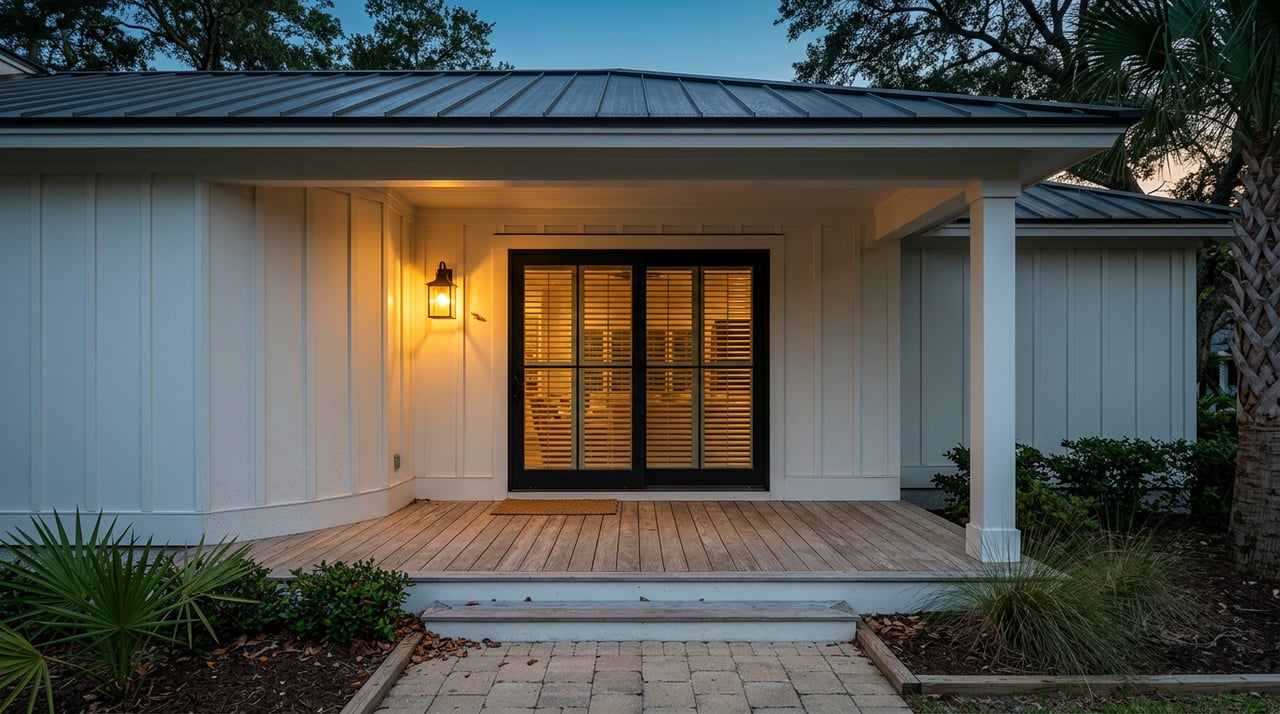
- Interior light counts. Beachfront households are asked to close curtains or blinds at night during season. Indoor light spilling through a slider is enough to disorient hatchlings crossing the sand toward the wrong horizon.
The Jekyll Island Authority publishes the full ordinance text on its site, and if you are renovating a beachfront exterior this year it is worth reading before you spec fixtures.
If you find a turtle, a crawl, or a disturbed nest, the number to keep in your phone is the Sea Turtle Hotline at (912) 215-5046. It is answered by Georgia Sea Turtle Center staff during the season.
How to get closer without being the problem
Plenty of full-time residents want to be involved beyond turning off a porch light. There are structured ways in, and most of them fill up fast once nesting picks up in June.
- Two-hour guided Turtle Walks begin with a short presentation and then move to the beach in pursuit of a nesting female. These are the most visitor-friendly option and a good one for family in town.
- Ride with Dawn Patrol puts you in an ATV at sunrise helping locate and catalog new nests laid overnight.
- Ride with Night Patrol is the field-biologist experience, with the possibility of observing a nesting female up close.
- Turtle Track Detectors is the volunteer track for residents who can commit to regular early-morning walks on an assigned stretch of beach.
- Adopt-a-Nest through the Jekyll Island Foundation is the low-time-commitment support option and funds a specific nest through hatch.
- The Turtle Crawl, run each spring out of Beach Village, is the fundraising 5K, 10K, and one-mile fun run that opens the season socially.
The Georgia Sea Turtle Center itself operates on timed-entry admission, so if you are bringing houseguests, book online rather than showing up cold on a July Saturday.
What this means for the rest of the summer
Peak nesting on Jekyll runs into late July. Hatching begins in earnest in August and continues through September, often into October. That second window is when the red-flashlight discipline matters most, because a single bright porch across a dune line can pull a fresh clutch of hatchlings the wrong direction on a still night. If you have not yet swapped exterior bulbs this season, the next few weeks are the right time to do it.
The larger point is that residency on this island comes with a small, seasonal contract. Fill the holes. Kill the lights. Watch the dashboard if you like. The 11,300-plus hatchlings that reached the water last year did so because a lot of ordinary households on Jekyll treated their evening routines as part of the work.
If you are thinking about how a home's siting, lighting design, or exterior renovation intersects with beachfront ordinances, or you are weighing an oceanside purchase and want to understand what year-round life next to a nesting beach actually looks like, GK Real Estate Advisors is happy to walk the block with you. Start with a complimentary home valuation.