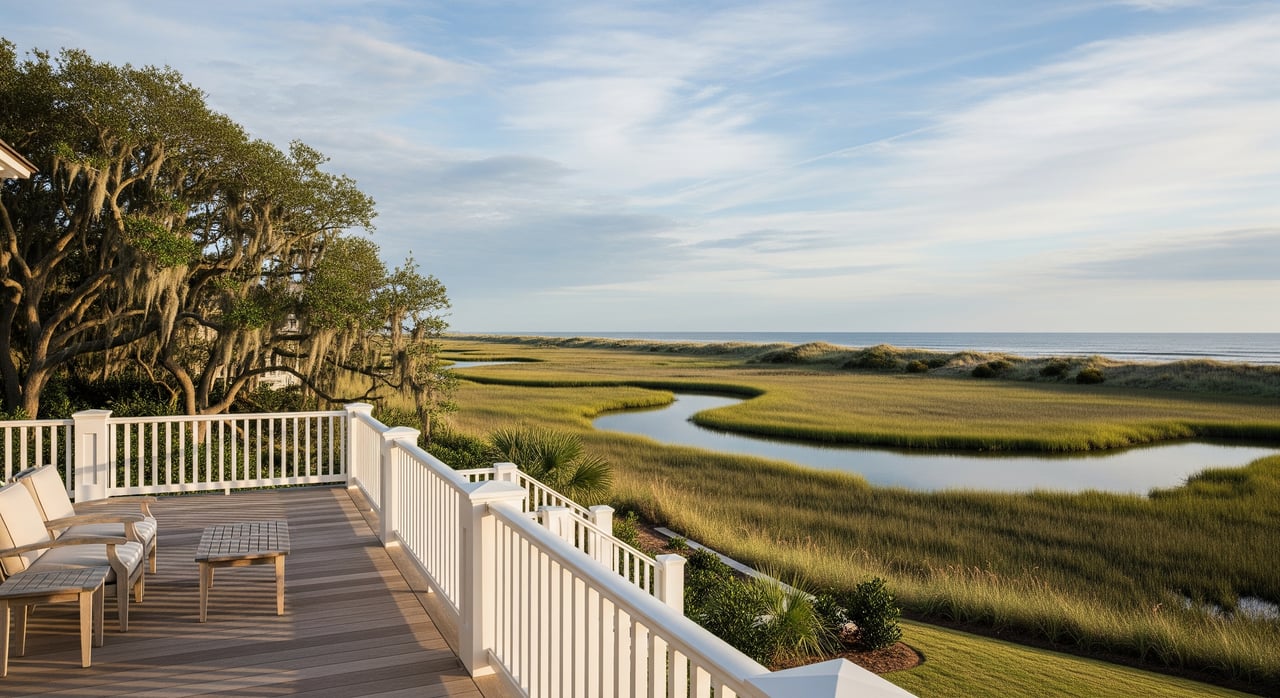
If you are weighing oceanfront against marsh-view on Sea Island, you are really comparing two different kinds of luxury. Each view delivers a distinct lifestyle and a different cost profile, which is why pricing can feel complex fast. You want to protect your investment without giving up the coastal experience that drew you here. In this guide, you will learn how each setting affects value, risk, insurance, and long-term ownership so you can price or bid with confidence. Let’s dive in.
Oceanfront vs. marsh-view explained
Oceanfront on Sea Island means direct Atlantic frontage. You get surf, sand, and the potential for private beach access. The orientation can matter for sunrise or sunset views, and dune systems often shape privacy and buildability.
Marsh-view faces panoramic tidal marshes with winding channels and wildlife. You do not have surf or direct beach access, but you often gain privacy, calmer water views, and potential access to estuarine paddling or boating where allowed.
To understand the broader lifestyle context and amenities, review the official Sea Island community and real estate overview.
What drives price on Sea Island
View and frontage
Direct Atlantic frontage is typically the most sought-after attribute for luxury buyers. Continuous surf views, beach access, and the sound of waves often command a premium. The scale of that premium varies by lot size, view corridor width, and privacy from neighboring homes.
Marsh-view can rival oceanfront where the marsh is expansive and protected. Long, unobstructed vistas and the sense of seclusion are major draws. In some cases, a superior marsh panorama can outperform a compromised oceanfront view.
Access and private amenities
Private beach access, dune protection, and a direct path to the sand can lift oceanfront value. Lots that require using public access points may see a smaller premium.
Marsh-oriented properties sometimes offer water access for kayaking or small craft into estuaries. Buyers who prioritize tranquility and nature often pay up for these experiences even without the beach.
Buildability and elevation
Buildable footprint, setbacks, height limits, and elevation above Base Flood Elevation (BFE) affect land value. A higher-elevation marsh-view lot with a larger usable envelope may be more valuable than a lower-lying oceanfront parcel with tighter constraints.
Oceanfront is more likely to face dune and shoreline protection rules that reduce buildable area. Before pricing, confirm setbacks, allowable height, and any recorded easements or conservation areas that limit future use.
Risk and erosion profile
Oceanfront properties are exposed to direct wave action, storm surge, and coastal erosion. That exposure can translate into higher insurance premiums and maintenance. Buyers factor these costs into what they are willing to pay.
Marsh-view sites are often more sheltered from waves but can still experience flooding during storm surge. Long-term sea level rise and shoreline change remain relevant risk considerations for both settings.
Privacy, orientation, and context
Larger oceanfront lots with mature vegetation and generous setbacks tend to command more. The way a home orients to sunrise or sunset can also impact perceived value.
Marsh parcels that back to preserved open space and face little chance of future obstruction often trade at a premium. The promise of quiet and uninterrupted vistas matters to many buyers.
Marketability and demand
Oceanfront typically attracts a broader luxury audience seeking direct beach access and surf views. Marsh-view appeals to those who prefer wildlife, calm water, and a sense of retreat.
If rental income is part of your plan, confirm local rules before underwriting potential income. Rental potential and resort usage can influence investor pricing, but community restrictions may limit options.
Ownership and lifecycle costs
Salt air, wind, and humidity accelerate wear on exterior materials and systems. Oceanfront exposure can increase maintenance frequency and cost. Sellers who document recent maintenance often defend value more effectively.
Insurance and risk mitigation are part of the total cost picture. Buyers compare net ownership costs when choosing between oceanfront and marsh-view, and those cost differences can move price.
Flood zones, insurance, and permitting
Sea Island sits within mapped FEMA flood zones that vary by location. Some oceanfront areas may fall into coastal high hazard categories like V zones, which carry stricter building standards and can affect insurance pricing. Use the FEMA Flood Map Service Center to confirm the current flood zone for a specific property.
An Elevation Certificate is a key document for underwriting flood insurance. Ask for it early, and consider updating it if significant changes have been made to the site or structure.
Windstorm and hurricane coverage may require separate policies, and premiums can be higher for exposed oceanfront parcels. Always obtain quotes tied to the exact address and elevation before finalizing price expectations.
Oceanfront construction and repair often involve additional permits and setback rules to protect dunes and shoreline dynamics. Review guidance through the Georgia Department of Natural Resources and coordinate with Glynn County planning and floodplain officials for site-specific requirements.
For longer-term context, explore local projections in the NOAA Sea Level Rise Viewer. While these are scenarios, they can influence lender, insurer, and buyer perceptions.
Pricing strategy for sellers
If you are selling oceanfront or marsh-view, your goal is to prove the quality of your view, the usability of your land, and the sustainability of ownership.
- Highlight unique attributes: true beach frontage, private access, wide view corridors, elevated building pads, and protected marsh adjacency.
- Prepare documentation: current survey, Elevation Certificate, flood zone panel information, and any shoreline or erosion studies.
- Show the view in context: professional photography at both low and high tide, plus aerials that illustrate privacy and orientation.
- Be transparent on costs: recent flood and wind insurance quotes, typical maintenance schedules, and any dune or shoreline management records.
- Price with precision: anchor your ask with recent local comps and, where comps are scarce, support with a paired-sales narrative that explains your adjustments.
Evaluation checklist for buyers
Before you write an offer, verify the details that affect value, risk, and long-term enjoyment.
- Confirm flood zone and request the Elevation Certificate. Use the FEMA Flood Map Service Center and review map panel effective dates.
- Obtain insurance quotes for both flood and wind tied to the property’s elevation and construction.
- Review site constraints: buildable footprint, setbacks, allowable height, and any shoreline or marsh buffer limitations.
- Ask for documentation on erosion history or dune management for oceanfront, or marsh conservation status for marsh-view.
- Verify community rules and any club or HOA restrictions on rentals, exterior modifications, docks, or shoreline structures.
- Consider consulting a coastal engineer or surveyor for high-value or highly exposed sites.
Putting numbers to it on Sea Island
Sea Island is a niche, ultra-luxury market with limited inventory, so standard valuation methods need careful local adaptation.
- Comparable sales approach: start with Sea Island closed sales that match your view type, lot size, and buildability. When true comps are limited, pair similar sales and apply structured adjustments for view width, frontage, elevation, setbacks, privacy, and amenities.
- Cost approach: for new builds or recently constructed homes, replacement cost can help frame value, but remember that land scarcity and view quality often drive the premium.
- Income approach: if you plan to rent, estimate realistic seasonal occupancy and rates, then apply a market-informed cap rate. Confirm that rentals are allowed and align with community guidelines before relying on income.
Given the island’s exclusivity, it is common to use several methods together and cross-check conclusions. Many sellers and buyers supplement broker analysis with an appraisal, especially when properties are unique.
When marsh-view can beat oceanfront
There are real cases where an exceptional marsh-view commands more than an oceanfront home. For example, a high-elevation marsh lot with a broad, protected panorama, a large buildable area, and strong privacy can outprice an oceanfront parcel that is lower, constrained by setbacks, or more exposed to erosion risk.
The lesson is simple. On Sea Island, the best view is the one with the most net utility to you, balanced by sustainable ownership costs and risk.
Common pitfalls to avoid
- Assuming all oceanfront is created equal. Elevation, dune health, and setback rules make a big difference.
- Underestimating insurance and maintenance. Always price with current quotes and realistic upkeep in mind.
- Ignoring buildability. A spectacular view loses value if you cannot build what you want within code.
- Skipping tide-time due diligence. See the property and its surroundings at both low and high tide to understand privacy, noise, and usage.
- Relying on off-island comps without proper adjustments. Sea Island’s exclusivity and amenities require local context.
Market context and seasonality
Coastal markets can be seasonal and influenced by second-home demand patterns. Broader trends in coastal buying and insurance availability often shape negotiations and timing. For national perspective on market dynamics, the National Association of Realtors provides research that can help frame what you see locally. Always pair national context with Sea Island’s hyper-local supply and demand.
Your next step
If you want tailored pricing for oceanfront or marsh-view on Sea Island, it pays to combine view analysis, site constraints, risk, and insurance into one clear strategy. We can help you gather the right documents, model scenarios, and position your sale or offer with confidence. To talk through your plans or request a property-specific valuation, connect with GK Real Estate Advisors. Start with a complimentary home valuation and a clear plan.
FAQs
Do oceanfront homes on Sea Island always cost more than marsh-view?
- Oceanfront often commands a premium, but not always. The final price depends on view width, elevation, buildability, privacy, and risk. A superior marsh-view with higher elevation or larger usable area can outprice a constrained oceanfront parcel.
How do FEMA flood zones affect Sea Island pricing?
- Flood zone category and elevation above BFE influence building requirements and flood insurance costs. Check the address on the FEMA Flood Map Service Center and request the Elevation Certificate before setting price or making an offer.
What insurance should Sea Island buyers compare for oceanfront vs. marsh-view?
- Review flood and windstorm coverage, as premiums can be higher on exposed oceanfront sites. Always obtain quotes tied to the specific structure, elevation, and flood zone to compare total ownership cost.
Are there special permits for building on Sea Island oceanfront lots?
- Yes. Coastal setbacks, dune and vegetation protection, and potential restrictions on shoreline structures apply. Consult Glynn County officials and review guidance from the Georgia Department of Natural Resources early in your planning.
Where can I check sea level rise scenarios for Sea Island property decisions?
- Use the NOAA Sea Level Rise Viewer to explore inundation scenarios. While these are projections, they can inform long-term planning and may affect lender and insurer assumptions.
What documents should Sea Island sellers prepare to justify a premium?
- Provide a current survey, Elevation Certificate, recent insurance information, tide-time photography, and details on setbacks, buildable area, and any shoreline or marsh protections. This transparency helps defend value and speed due diligence.