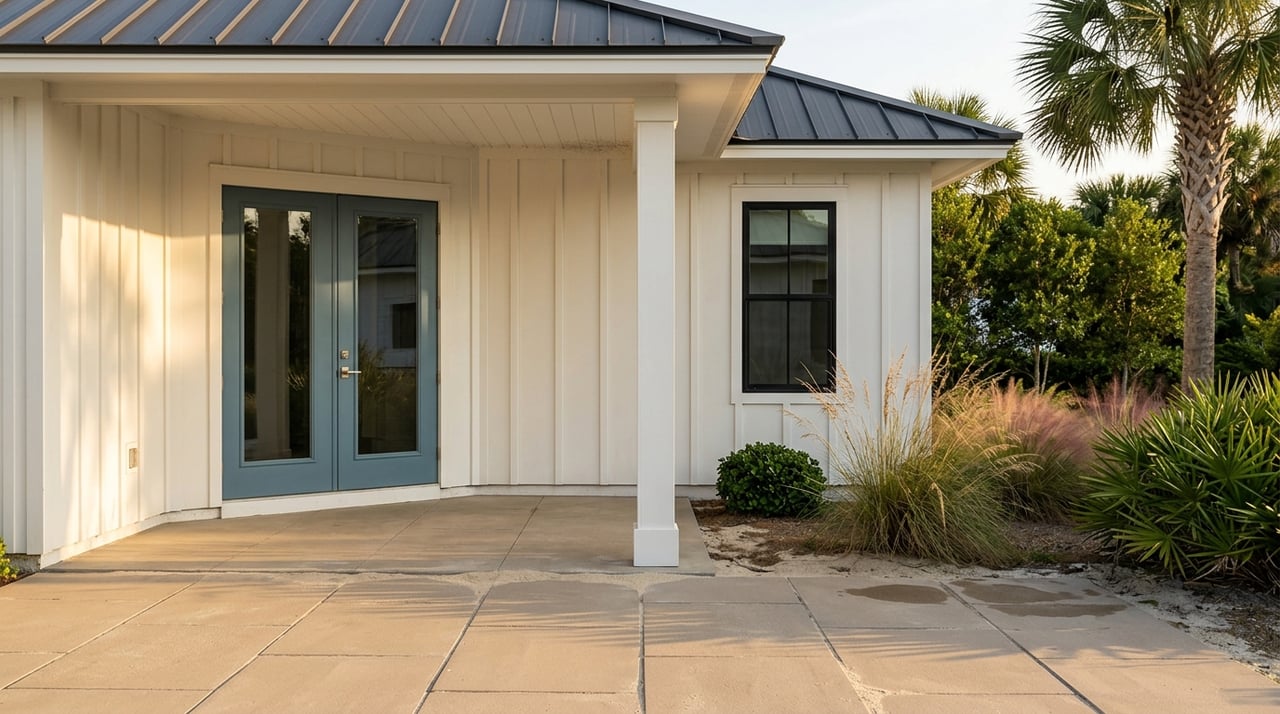
If you are deciding between an oceanfront home and an interior home on Jekyll Island, the real question is not simply, “Do I want to be near the beach?” On Jekyll, much of the island remains protected natural land, public beach access is built into island life, and even many interior homes still keep you close to the shore. What matters most is how you want your home to feel day to day, what upkeep you are comfortable with, and how you want to balance views, privacy, and long-term costs. Let’s dive in.
Why this choice feels different on Jekyll Island
Jekyll Island is not a typical beach market. It is a state-managed barrier island where most of the land remains in a natural state and development is tightly limited.
That matters because the gap between oceanfront and interior living is narrower here than in some coastal markets. With 10 miles of shoreline, several public beach access points, and more than 24 miles of bike paths, many homes that are not directly on the ocean still offer easy beach access and a strong coastal lifestyle.
At the same time, inventory is limited. The research report noted 64 homes for sale at the time of capture, which means buyers often need to think clearly about priorities before the right opportunity appears.
Oceanfront homes: what you are really paying for
An oceanfront home on Jekyll Island usually delivers the most direct version of beach living. Current listings described these homes with features like Atlantic views, dune canopy, and direct beach access.
In practical terms, you are paying for immediacy. The beach is not part of your weekend plan. It becomes part of your everyday routine, from morning views to quick walks over the dunes.
The biggest advantages of oceanfront living
Oceanfront homes tend to offer the strongest visual connection to the coast. If your goal is to feel immersed in the beach environment every day, this location can be hard to match.
You may also value the experience of stepping outside and being at the shoreline within moments. For some buyers, that convenience justifies a meaningful price premium.
The trade-offs that come with the view
Closer proximity to the shoreline also means more exposure to salt spray, wind-driven moisture, and corrosion. FEMA notes that salt spray is strongest near breaking waves and declines rapidly inland, so maintenance conditions can be very different depending on how close a home sits to the beach.
Oceanfront ownership on Jekyll also comes with closer interaction with conservation and beach-use rules. The island’s beach ordinance restricts activities such as disturbing dune vegetation, taking vehicles on beaches, building open fires on the beach, and walking on revetments or seawalls. Certain lighting is also limited on nesting beaches from May 1 through October 31.
Interior homes: more than a backup option
On Jekyll Island, an interior home is not the same as giving up the beach lifestyle. In many cases, it means choosing a different version of it.
Current inland listings emphasize features like live oaks, private backyards, and a quieter residential setting. One example in the research report was marketed as being just 700 steps from two beach access points, which shows how close some interior homes can still be to the water.
What many buyers like about interior locations
Interior homes often offer a more screened, tucked-away feel. Surrounded by live oaks or set within smaller inland areas, they can feel quieter and more private than homes located right near public beach corridors.
They can also open up more flexibility in your budget. If you want to prioritize square footage, yard space, or lower carrying costs over direct beachfront positioning, interior homes may give you more options.
Why interior does not mean disconnected
Jekyll maintains multiple public beach access points, including Oceanview, Great Dunes, Beach Village, and St. Andrews. Beach parks also offer features such as parking, restrooms, showers, and accessible crossings.
That means many interior homeowners still enjoy regular beach time without paying the full premium for direct ocean frontage. On Jekyll, interior living is often better described as beach-close with a quieter home base.
Beach-close communities can offer a middle path
Some buyers do not want a strict oceanfront-versus-interior choice. They want strong access to the beach without being directly on the waterline.
Beach-close communities with features like private boardwalks can fill that gap. The research report highlighted one beach-close home in Ocean Oaks with its own boardwalk, showing how some properties can combine convenient access with a bit more separation from the shoreline.
This option may appeal to you if you want a beach-centered lifestyle but prefer some buffer from direct salt exposure, public foot traffic, or full oceanfront pricing.
Privacy and daily atmosphere
Lifestyle matters as much as location on Jekyll Island. The difference often comes down to what you want your home to feel like when you are not at the beach.
Oceanfront homes can feel more open and exposed because public beaches and access routes bring more nearby foot and bike traffic. Interior homes, especially those tucked among trees, may feel more secluded.
That is not a hard rule for every property. Some beach-close communities use boardwalks and shared common areas to shape access and create a more private feel. Still, if privacy ranks high on your list, it is worth comparing not just the map location, but also how each property sits on its lot and connects to surrounding access points.
Costs go beyond the purchase price
One of the most important trade-offs on Jekyll Island is the difference between sticker price and carrying cost.
The research report showed a broad pricing spread. An inland single-family home was listed at $650,000, while oceanfront single-family homes were listed around $1.6 million to $1.65 million. A beach-close home with a private boardwalk was listed at $1.85 million. Condo options, including units at Villas by the Sea, were listed in the upper $300,000s to low $400,000s.
HOA dues can change the equation
Ownership structure matters just as much as location. One beach-close home in the research report carried a $500 monthly HOA, while an inland home showed no HOA.
A condo can also have a lower entry price but much higher monthly dues. One oceanfront condo in the report was listed in the high $300,000s, but with a $1,428 monthly HOA.
That is why it is important to compare the full monthly picture, not just the list price. Ask about dues, reserve funding, and any possible special assessments before deciding what feels affordable.
Flood and insurance due diligence matter everywhere
On a barrier island, flood due diligence should be part of your home search whether you are looking at oceanfront, beach-close, or interior properties.
FEMA advises buyers to check the effective flood map for the exact property. FloodSmart notes that homes in high-risk zones may require flood insurance for federally backed mortgages, and FEMA also states that flood risk can change over time because of weather patterns, land development, and erosion.
For Jekyll buyers, the key is to evaluate the exact parcel you are considering today. The better question is not whether a home is “safe” in the abstract, but how it is mapped, insured, and maintained right now.
A simple way to decide
If you are torn between oceanfront and interior homes on Jekyll Island, it helps to frame the decision around your actual habits instead of the dream image in your head.
Ask yourself:
- How often will you realistically use the beach in a typical week or season?
- Do you want the beach to be the main feature of daily life, or do you prefer a quieter residential base?
- Is direct sand access worth a higher purchase price or potentially higher carrying costs?
- Would you rather have more privacy, yard space, or budget flexibility?
- Are you comfortable with HOA dues, association rules, or possible assessments if you buy in a shared community?
- Have you reviewed the flood map and insurance quote for the exact property?
These questions usually bring the right answer into focus.
Which option fits which buyer
Oceanfront homes often make the most sense if you want the beach experience to shape your everyday routine and you are comfortable with the added maintenance and cost that often come with that location.
Interior homes often make the most sense if you want easier privacy, a wider range of price points, and less direct exposure to beachfront conditions while still staying close to public access and bikeable island amenities.
Beach-close community homes can work well if you want something in between. You may still get convenient access and a strong coastal feel, but with different trade-offs around ownership structure, dues, and maintenance.
The bottom line on Jekyll Island
On Jekyll Island, oceanfront is usually a premium for view, immediacy, and experience. Interior living is often a value play on privacy, flexibility, and easier day-to-day trade-offs.
Neither choice is automatically better. The best fit depends on how you plan to use the home, what kind of setting helps you relax, and how you want to balance lifestyle with long-term ownership costs.
If you want help comparing specific Jekyll Island homes, weighing carrying costs, or narrowing down which location aligns with your goals, GK Real Estate Advisors can help you make a clear, informed decision.
FAQs
What is the main difference between oceanfront and interior homes on Jekyll Island?
- The biggest difference is usually daily experience. Oceanfront homes put the beach at the center of everyday life, while interior homes often offer more privacy, a quieter setting, and more budget flexibility while still staying close to public beach access.
Are interior homes on Jekyll Island still close to the beach?
- Often, yes. Jekyll Island has several public beach access points and more than 24 miles of bike paths, so many interior homes still provide convenient access to the shoreline.
Do oceanfront homes on Jekyll Island cost more to maintain?
- They can. Homes closer to breaking waves face more salt spray, wind-driven moisture, and corrosion, which can increase maintenance needs over time.
Do all Jekyll Island beach-close homes have HOA fees?
- No. Ownership structure varies by property. Some beach-close or condo communities have HOA dues, while some inland homes may have no HOA at all.
Should buyers check flood maps for interior homes on Jekyll Island too?
- Yes. Flood due diligence matters for oceanfront, beach-close, and interior homes alike. Buyers should review the effective flood map and insurance details for the exact parcel they are considering.
Is an oceanfront condo on Jekyll Island always cheaper than a single-family home?
- The purchase price may be lower, but monthly carrying costs can be much higher depending on HOA dues. It is important to compare the full cost of ownership, not just the asking price.